The Last Harbor
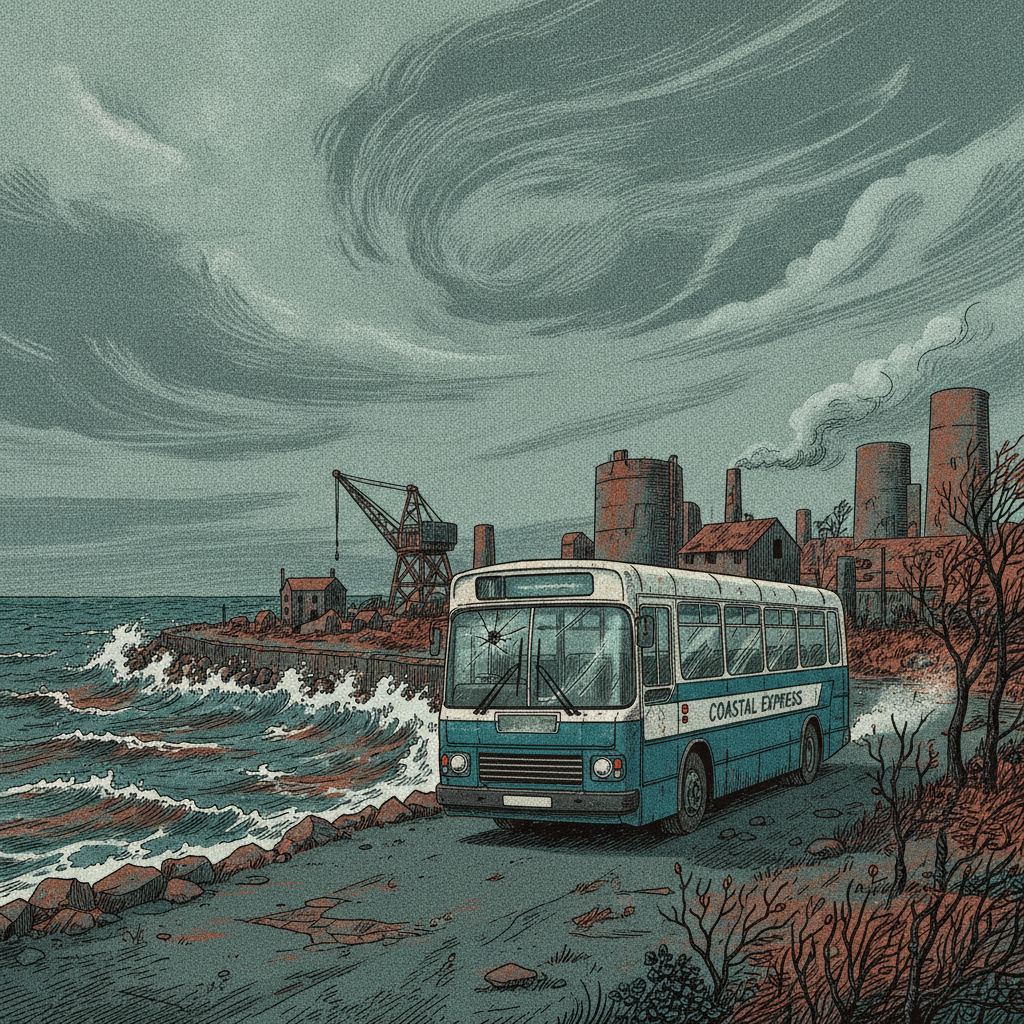
The bus coughed its last breath at the edge of New Bedford. Cold bit through my worn denim. October, 1985. The air reeked of salt, diesel, and something older – the ghosts of gutted fish, forgotten dreams. I pulled my duffel tighter, the cassette recorder against my hip a familiar weight.
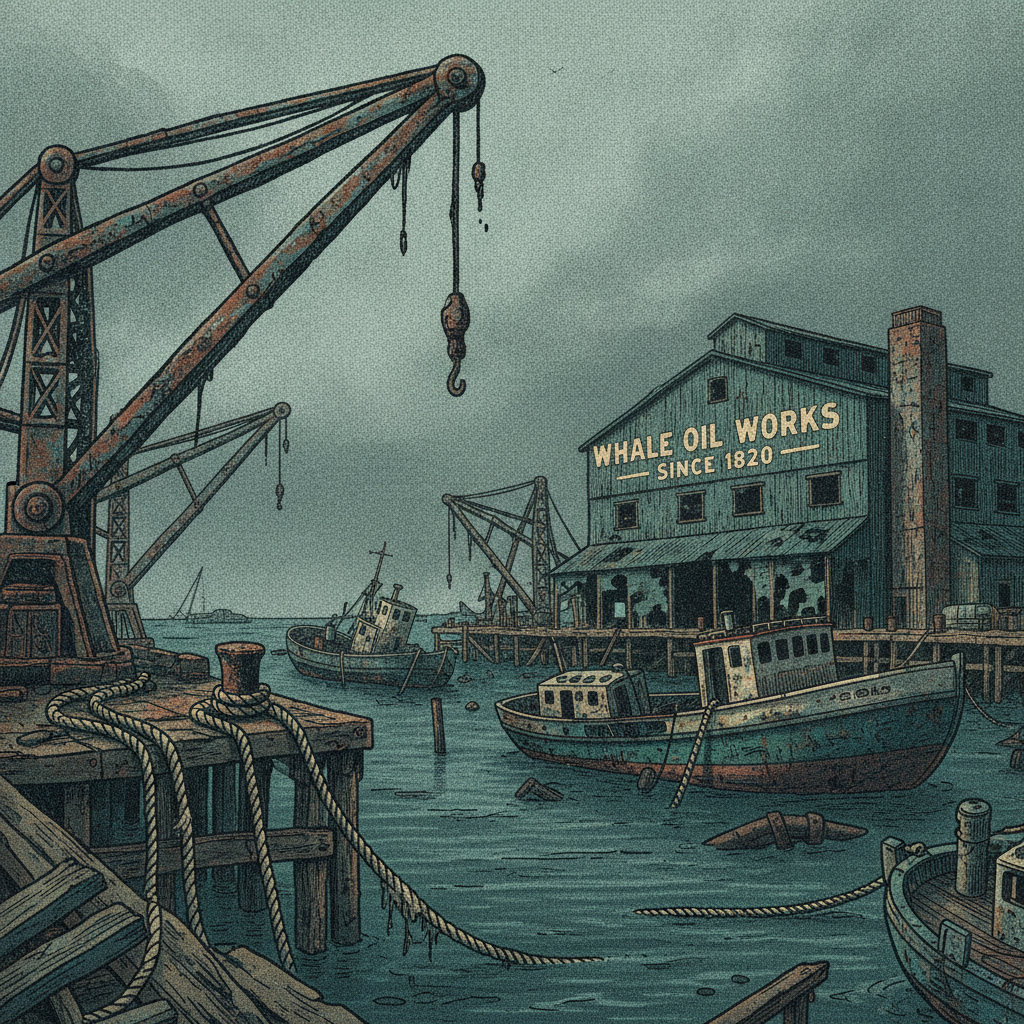
The docks were a graveyard. Rust ate through everything: gantries, mooring lines, the hulls of half-sunk trawlers. Faded letters on an abandoned cannery read: "Whale Oil Works – Since 1820."
*Since.* Not *Until*.
A gull shrieked, slicing the grey sky.
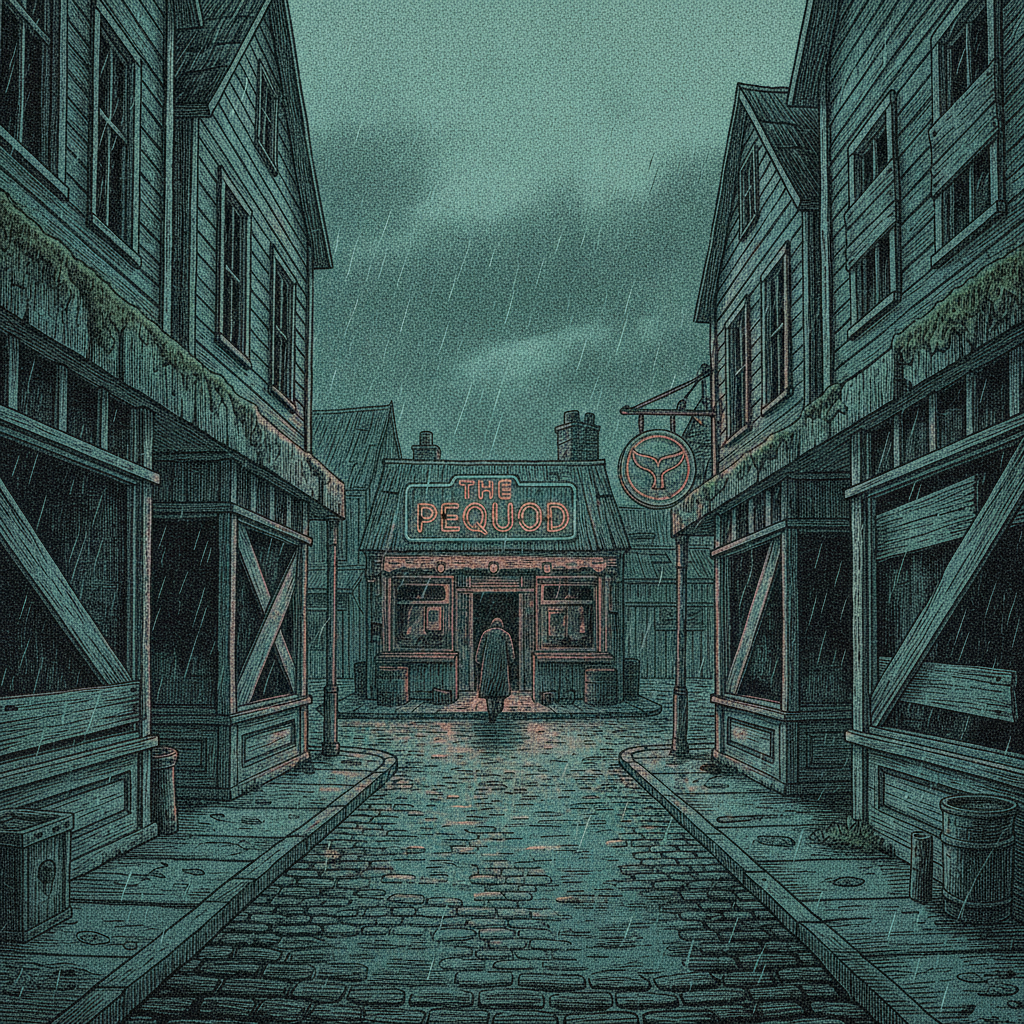
I walked the cobbled street, past boarded-up storefronts and the flickering neon of a dive bar. The *Pequod*.
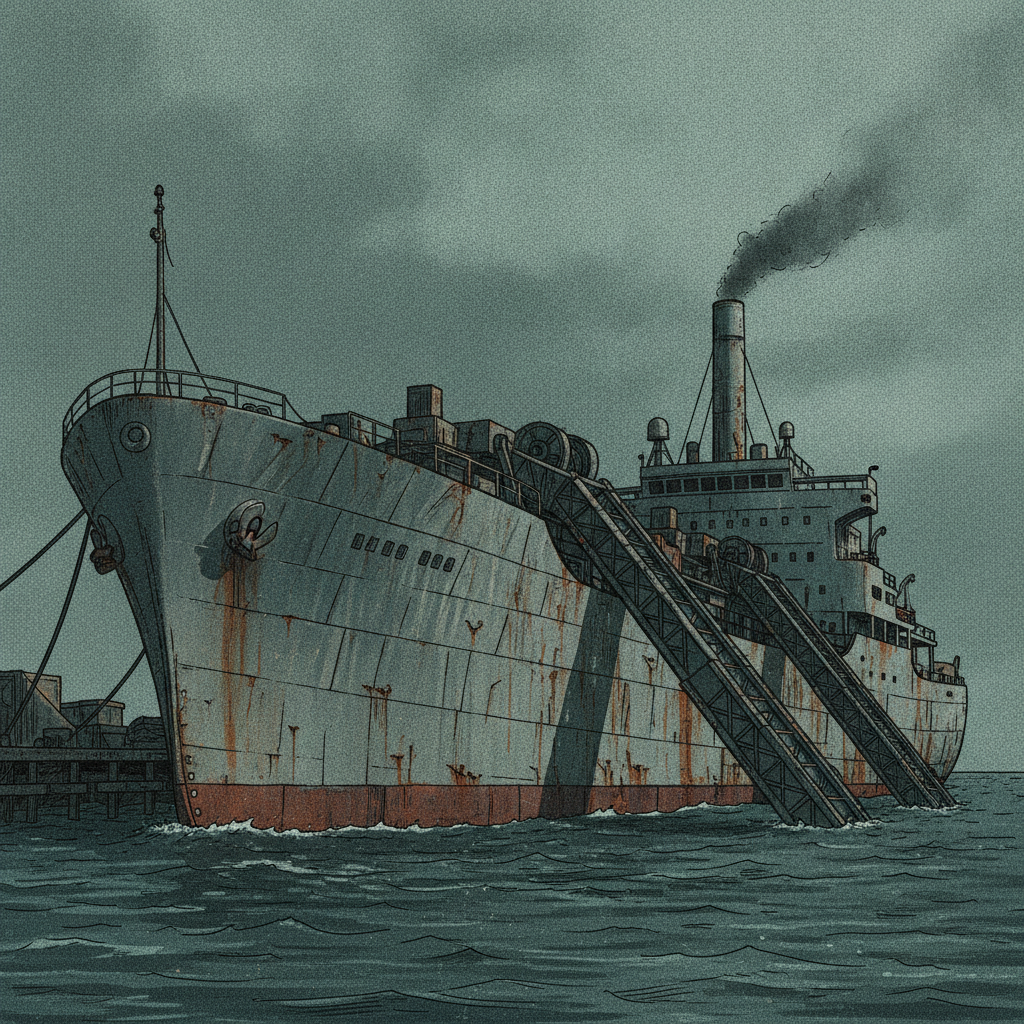
Down by Pier 17, she sat. A behemoth of steel, grey and scarred. Not a schooner, not a clipper. A factory ship. Rust bloomed on her plates. Her processing ramps, massive and brutal, angled towards the water. Smoke plumed from a stack, thin and dark.
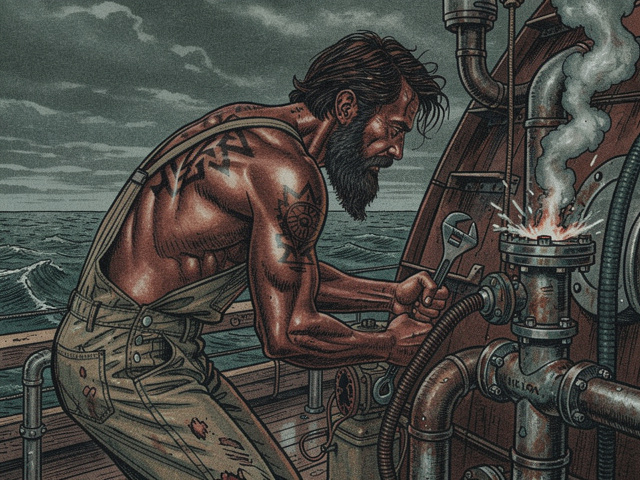
A man bent over a series of pipes near the bow, wrench in hand. His back was a canvas of dark tattoos – jagged lines, geometric patterns that looked tribal, ancient. Oil-stained overalls. Skin the color of polished mahogany.
He grunted, tightening a valve. Steam hissed.
I stopped a few feet away. "Looking for the *Pequod*."
He straightened slowly. His eyes, dark and intelligent, met mine. They held an unsettling calm. A harpooner's face, carved by wind and salt, but framed by the grease of an engineer.
"You found her." His voice was deep, a low rumble. "You the new hand?"
I nodded. "Ishmael."
"Queequeg." He wiped his hands on a rag, though the oil seemed permanent. He gestured with his chin towards a narrow gangplank. "Captain's in his cabin. We sail on the tide."
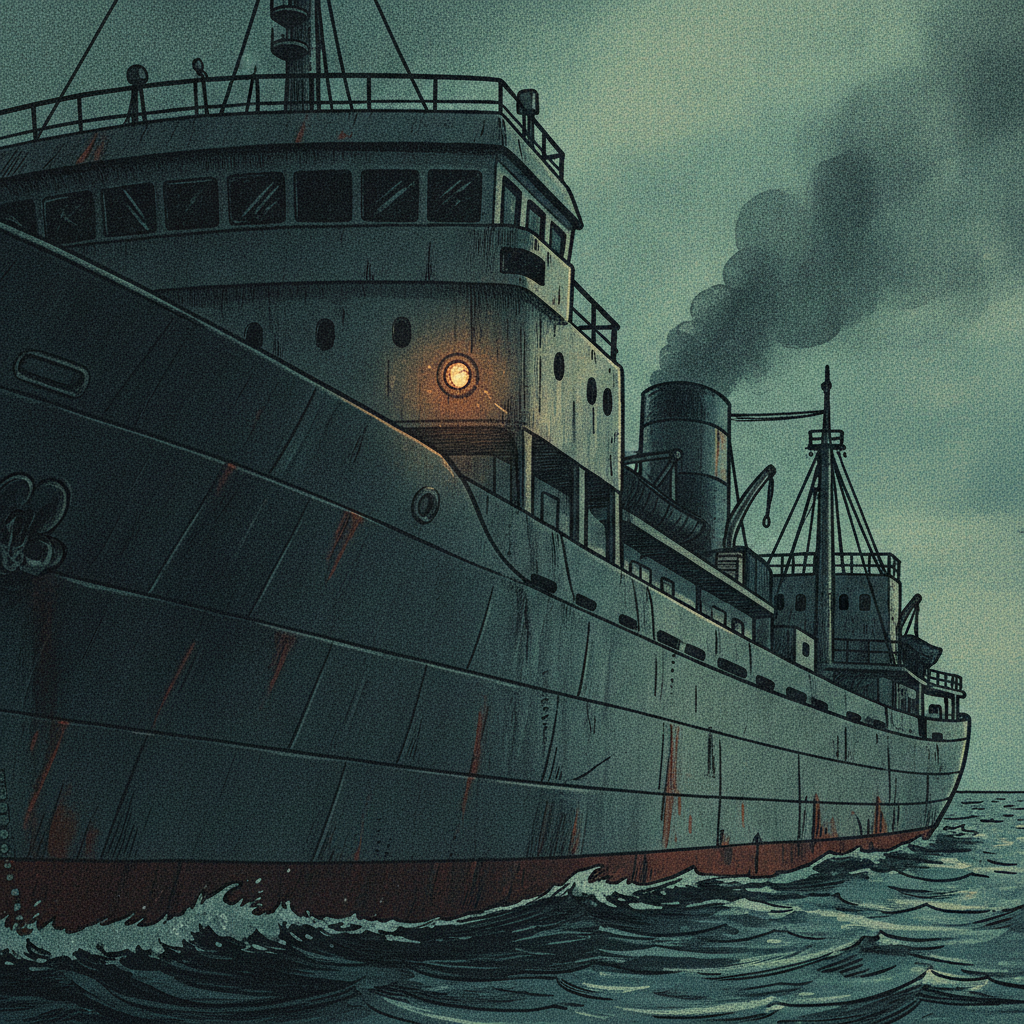
The *Pequod* shuddered. A low vibration hummed up from her engine room. The air thickened with the smell of old iron.
Somewhere above us, a single light in a darkened porthole flickered. The bridge.
I couldn't see him, but I felt him.
Captain Ahab.
The *Pequod* was his weapon. We were just the ammunition.